Is a heat pump right for a normal West Midlands house?
Plenty of installers will tell you every house suits a heat pump. It is not true, and finding out the hard way is expensive. Here is what actually has to be in place — and when we would tell you to stick with gas.
The short version
A typical 1930s to 1990s semi or detached house in the West Midlands — cavity walls, insulated loft, double glazing, wet radiator system — is usually a good candidate. A solid-walled Victorian terrace with no insulation and single glazing is usually not, at least not yet.
Nothing in between is decided by the age of the house. It is decided by four things.
The four things that have to be true
The house has to hold heat reasonably well
A heat pump delivers heat gently and steadily. If the house loses heat faster than it can put it in, you need a bigger, more expensive unit and it still costs a lot to run. Loft insulation, cavity wall insulation where the walls are cavity, and double glazing are the baseline. This is the one that decides most cases.
The radiators have to be big enough
Because the water runs cooler — around 45°C rather than 70°C — each radiator gives out less heat than it did on gas. We measure every room and check the existing radiator against it. Most are already big enough, particularly in houses where they were sized generously. The ones that are not get upgraded, and that is a normal part of the job rather than a nasty surprise.
There has to be somewhere for a cylinder
Hot water is stored, not made on demand, so a combi household needs to find space for a cylinder. An airing cupboard is ideal. A loft or garage can work. If there is genuinely nowhere, that is a real obstacle rather than a detail — and it is the reason we occasionally say no.
There has to be outside space within a sensible pipe run
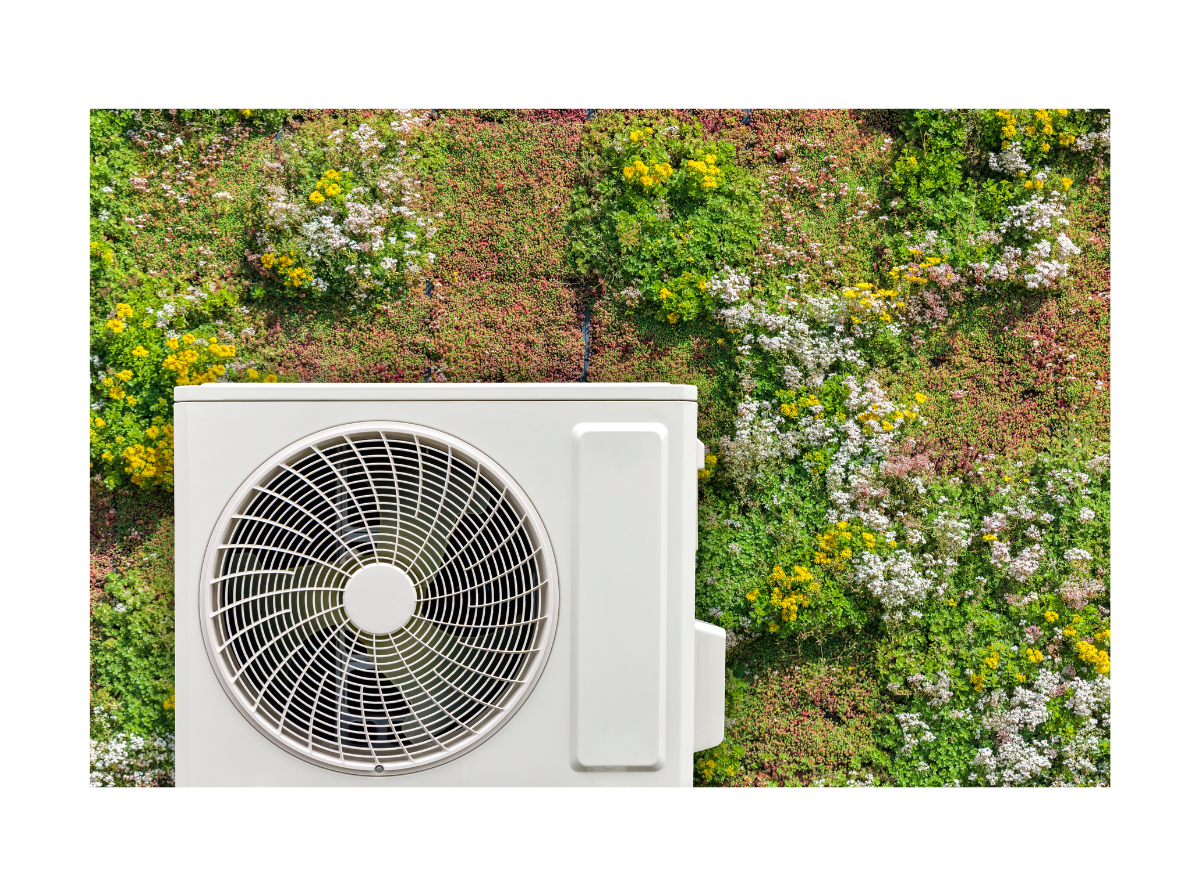
The outdoor unit is roughly washing-machine sized and needs air moving freely around it. A side return, a rear wall or a bit of garden all work. Long pipe runs from the unit to the cylinder cost efficiency as well as money, so the closer the better.
You do not need underfloor heating
This is the most common thing people believe and it puts a lot of them off. Underfloor heating is a heat pump’s ideal partner because it runs at low temperature over a large area — but correctly sized radiators do the same job perfectly well. If you already have underfloor heating, excellent. If you do not, nobody is lifting your floors.
What the grant does to the sums
The grant comes off the quote rather than being claimed back afterwards, and an MCS-certified installer has to do the work for it to apply. We'll talk you through how this works for your install at the survey.
Running costs, honestly
A heat pump returns roughly three to four units of heat for every unit of electricity. But electricity currently costs around four times as much per unit as gas, so the efficiency has to be genuinely good for the running cost to beat a gas boiler rather than merely match it.
That is why installation quality matters more here than with a boiler. The same appliance can return 3.8 in a well-designed system and 2.4 in a poor one, in the same house, in the same weather. The difference between those two numbers is the difference between a cheaper winter and an expensive one.
When we would tell you not to bother
Solid uninsulated walls with no plan to insulate them. No realistic space for a cylinder. A flat with no outside wall of your own. Or a gas boiler fitted two years ago that is working fine — replacing a healthy modern boiler rarely pays back, and you would be better spending that money on insulation and revisiting in a few years. We would rather say that at survey than sell you something that disappoints.
What the survey actually checks
- A room-by-room heat loss calculation — not a rule of thumb
- Every radiator measured against its room’s requirement
- Existing pipework sizes, and which runs need upgrading
- Cylinder location, and the pipe route to it
- Outdoor unit position, noise to neighbours, and clearances
- Electrical supply capacity and isolation
- Insulation as it stands, and what would help most
It takes a couple of hours and it is free. At the end of it you get a straight answer, including if the answer is not yet.