Boiler making a noise? What each sound usually means
Boilers are not silent, but they should be boring. A new noise is the system telling you something — usually harmless, occasionally urgent. Here is how to tell which is which.
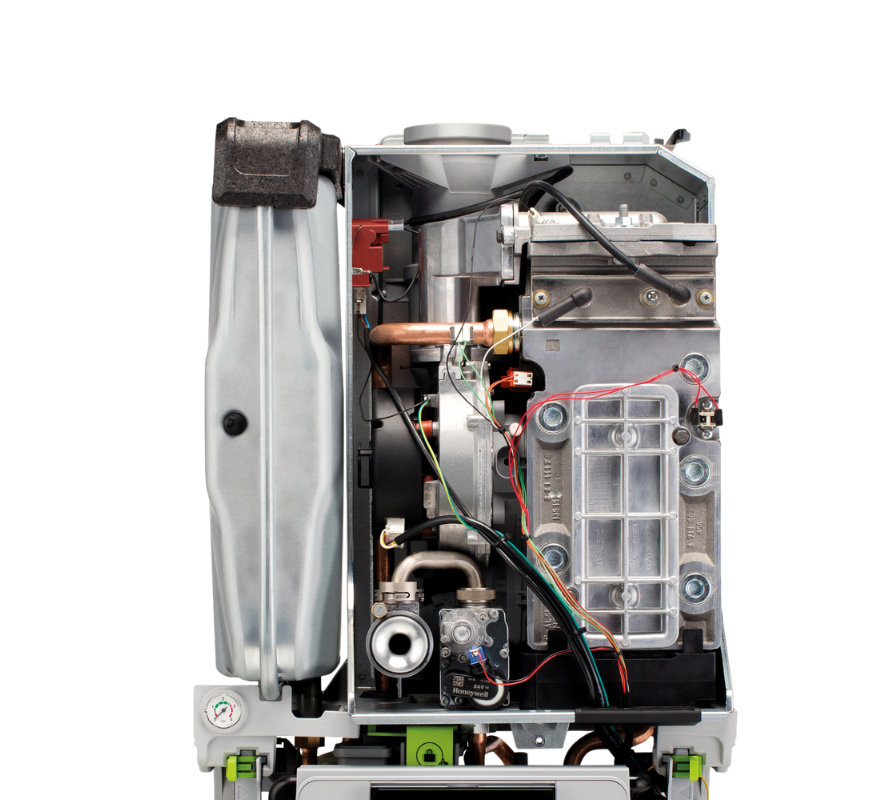
Two noises that mean stop
Everything else on this page can wait until morning. These two cannot.
Turn it off and ring someone today
A loud bang when the boiler fires up. That is usually delayed ignition — gas building up before it lights. It needs looking at straight away, not next week.
Any sound of escaping gas, or a smell of it. Turn off the gas at the meter, open the windows, do not touch electrical switches, and ring the National Gas Emergency Service on 0800 111 999. Not us first — them.
The everyday noises
Kettling — a whistling or rumbling like a kettle
Limescale or sludge has built up on the heat exchanger, so water is boiling in patches instead of flowing smoothly. Common in hard water areas, and the West Midlands qualifies. Left alone it makes the boiler work harder and shortens its life. Usually a flush, a scale reducer, or in bad cases a heat exchanger. Not an emergency, but do not ignore it for a year.
Gurgling or trickling, like water running
Air in the system, low pressure, or a partially blocked condensate pipe. Bleed the radiators and check the pressure gauge sits around 1 to 1.5 bar cold. In winter it is often a frozen condensate pipe, which is the single most common reason a boiler stops in a cold snap — and thawing it with warm water round the outside pipe frequently fixes it.
Banging or knocking in the pipes, not the boiler
Pipes expanding against a joist or a clip as they heat up. Annoying, entirely harmless, and usually fixed by loosening a clip or adding a bit of padding. If it only happens when the hot tap goes off, that is water hammer and a different fix.
A constant hum or vibration
Normally the pump — either its speed is set too high or its mountings have loosened. Sometimes a loose casing panel. Cheap to sort, and worth doing because a pump that is straining is a pump on its way out.
Clicking without lighting
The boiler is trying to ignite and failing. Could be the ignition electrode, the gas valve, or a flame sensor that has sooted up. It will usually lock out and show a fault code. Note the code down before you reset it, because it tells the engineer where to look.
Dripping
Any water where water should not be gets looked at. A dripping pressure relief pipe outside usually means the expansion vessel has lost its charge or the pressure is too high. Water inside the case is more serious. Either way it will not fix itself, and a slow leak onto electronics ends up costing far more than the original part.
What these usually cost
We would rather quote you honestly on the phone than guess in an article, so ring us with the noise and any fault code and we will tell you roughly what you are looking at before we come out.
The thing that prevents most of this
Nearly every noise on this page starts as something small. An annual service catches sludge before it kettles, spots an expansion vessel losing charge, and sets the pump properly — and most manufacturer warranties require one anyway, so skipping it can cost you the warranty as well as the repair.